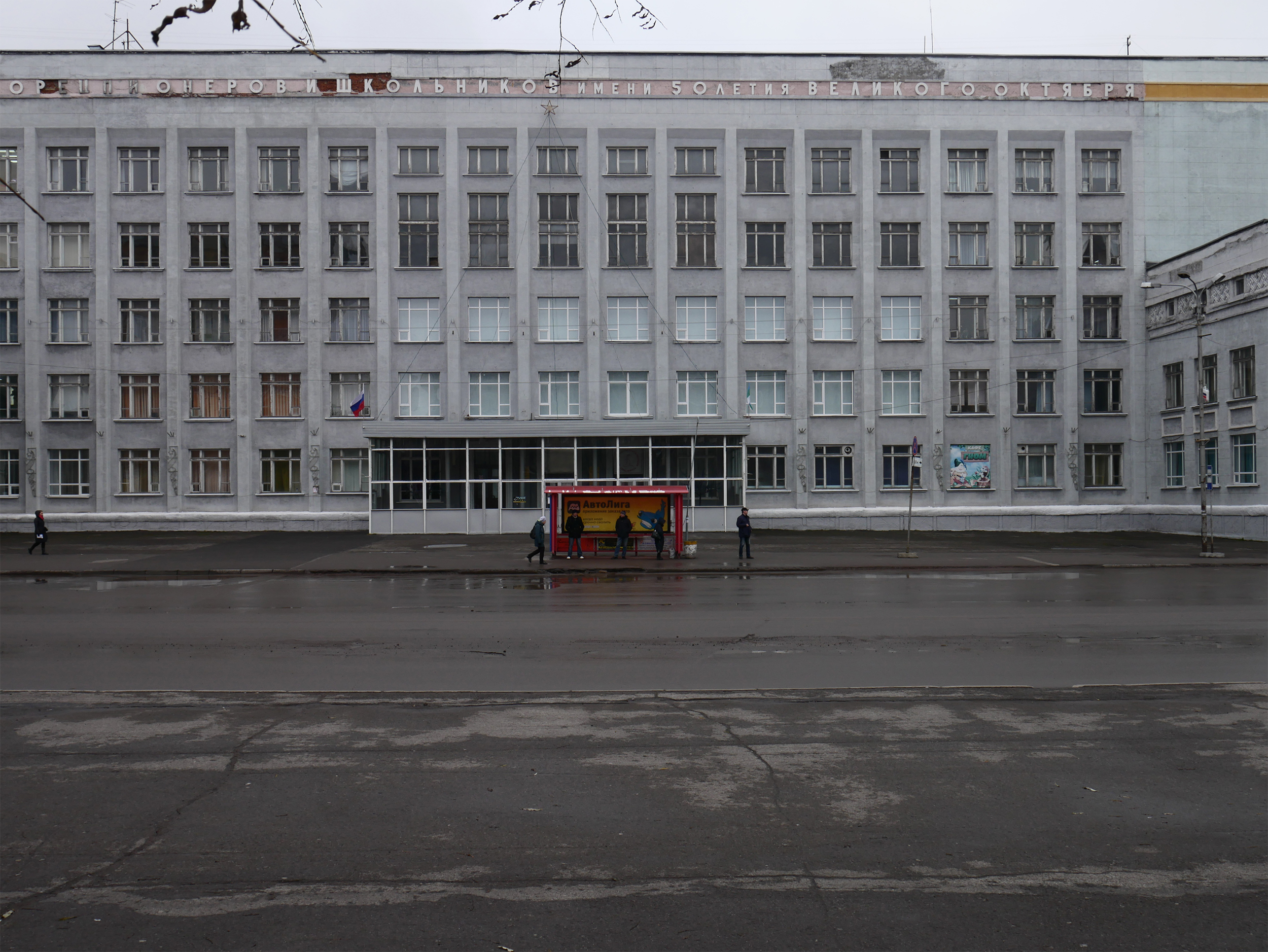
Unofficially dubbed ‘Chernobyl of the North’, Vorkuta has enough of a personality to make it stand out in its own right. The once-thriving coal town was built by prisoners from the network of camps dotted around north Russia popularly known as gulags (from the Russian glavnoe upravleniye lagerei).
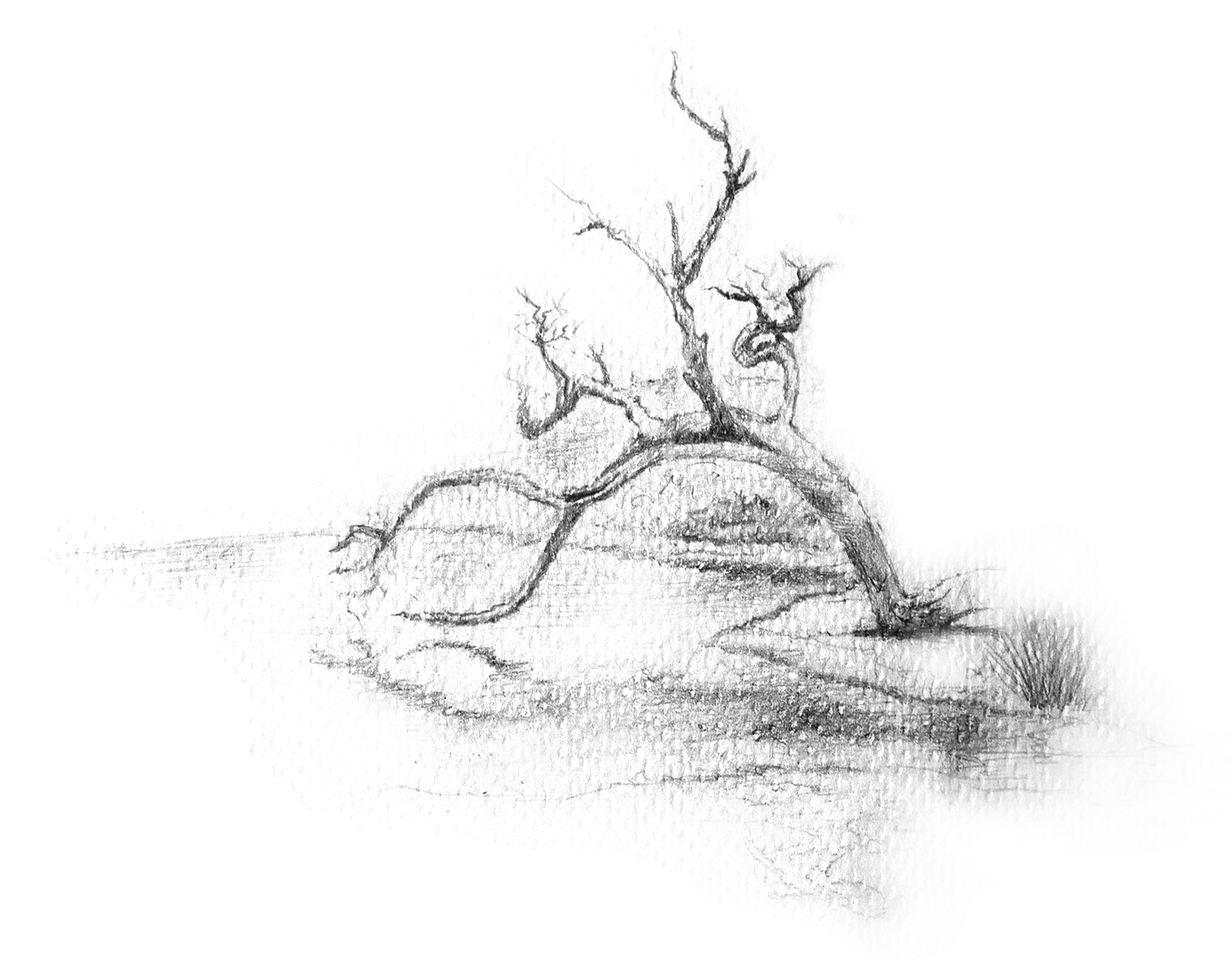
In 1941, the town was connected to the Northern Railway — which before that point had only run from Moscow to Arkhangelsk. The whole 1,200-mile journey took two days, spanning landscapes that resemble the austere sketches of Andrew Wyeth. This has remained pretty much the same through the years despite advances in train production, primarily due to the harsh terrain of the north.
We – my father and I – travelled on a sleeper train equipped with touchscreen-tablet menus and USB ports, a far cry from the utilitarian locomotives that made the journey nearly a century ago, outlined in startling detail in the works of Solzhenitsyn and Yerofeev.
Much to my surprise, the leap in travelling standards did not happen until very recently: my father recalled the ‘unimaginable’ filth and criminality that had been prevalent on the widely travelled TE3 during the Boris Yeltsin years1. In these carriages, ‘urine slopped over the corridor floors and bandity stuck their hands into every pocket and handbag in sight’.
Presently, we shared our space with two young men, who kindly coloured our perceptions of life in the north after some tea and biscuits. Fish reigns supreme in Vorkuta – grayling (a subspecies of salmon) is obtained from the nearby Kara Sea, an extension of the Arctic Ocean.
Vegetables are a scarcity, but mushrooms come aplenty. Among these are the honey fungus (opyata), foxy boletes (krasno-golovniki – ‘redheads’) and Lactarius resimus (gruzdi) – a popular delicacy in Russia but apparently not found in high esteem elsewhere.
Forgetting my journalistic fundamentals, I failed to record the young men’s names and soon they were completely wiped from my memory. I did, however, jot down their revelations nightly as the train chuck-chucked through the moonlit tundra with a thin LED shining down from the overhead ledge.
A raft of towns zoomed by us on our northward journey – Kotlas, Sindor, Inta. The train stopped briefly at some, giving us enough time to jump out and grab a tea with a warm belyash.
This part of the world had been palpably affected by the deindustrialisation of the nineties. Factories had been replaced by hair salons, phone repair shops and service-based enterprises. The prime example of this transformation was, unarguably, the last stop on our journey: Vorkuta itself.
As one of Russia’s monotowns, Vorkuta had once relied on the continuous extraction of coal to keep its economy afloat. When state-owned mines were sold off en masse during the privatisation era, many caved under pressure and, without state support, went bust. This caused a large-scale outflow of residents as many left in search of work elsewhere.
Though some of the remaining mines survived, consolidated under the umbrella of VorkutaUgol (Vorkuta Coal), it was not enough to stem the tide of outflowing humanity; the town’s population contracted by close to a third between 1989 and 2001.
Now, the population stands at roughly 57,000 – half of its 1989 peak, according to official figures. The true figure is much more challenging to obtain: many homeowners reside ‘on paper’ while living and working elsewhere.
Ambitious building projects started during the years of Gorbachev were abandoned shortly after the privatisation campaign began. Their efforts are now marked by the concrete carcasses standing lifeless against the tundra, monuments to an extinguished cause.


Some residents who had initially remained are now hatching plans to take themselves and their families elsewhere. Roman, a firefighter and part-time taxi driver, told me he and his family plan to relocate to Belgrade when he qualifies for the early retirement the fire service grants him.
‘They didn’t predict what would happen when the coal ran out. We used to have a meat plant, a poultry farm, a bread factory. It was a sustainable town. Now it’s all decommissioned: they only use Soviet infrastructure, nobody is building anything new.’
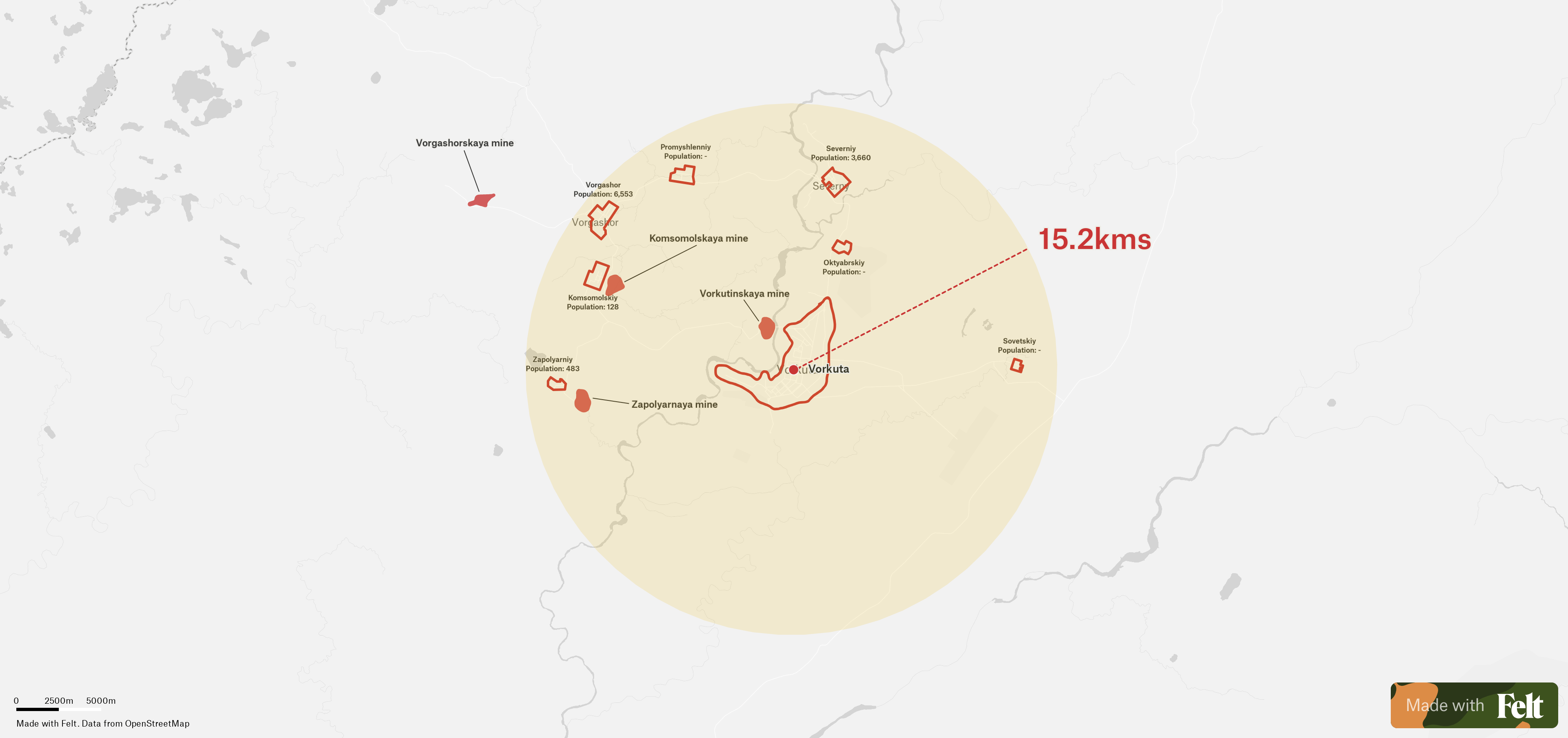
Roman drove us to the nearby settlement of Sovietsky, a neighbourhood that has since closed down due to the unsustainable number of vacant buildings. The government plans to resettle families in these far-flung micro-districts closer to the centre of Vorkuta to prevent the wastage of resources associated with keeping the buildings heated and energised2.
We combed through the derelict blocks, encountering piles upon piles of belongings – books, clothes, the occasional electrical appliance; things left behind in the rush to relocate. Roman said he is constantly called out to extinguish fires set to these buildings by teenage vandals.
The gradual erasure of Vorkuta’s settlements poses a stark glimpse into the town’s future (‘Many people come, stay for a while, and leave. It’s the tundra. We want something… warmer’). But many residents remain adamant that this is only the town’s changing of face, and that it will, undoubtedly, survive.
‘The town is not dying. I’ve been here 20 years now and I’m hearing that it’s dying. It’s too expensive to let it completely die out – there are repercussions.’
We met Natalia on a trip to the Vorkuta Museum and Exhibition Centre, where we learned about the humble beginnings of this arctic city (flagged by geologists in 1930 as a prosperous coal basin) and the brutal expansion that followed during the Stalin years (200,000 prisoners were estimated to have died in the cluster of camps known as Vorkutlag).
Natalia moved to the town from Donbas, eastern Ukraine, during the 1990s, at a time when the town’s jobless masses were fleeing elsewhere. She now works as the museum’s curator.


She gives short shrift to those who prophesy the town’s downfall. And her response does hit on something: the harsh conditions of the past 35 years seem to have strengthened the sense of community in Vorkuta.
Residents have started to organise events ranging from skiing to indoor sports for pensioners, children’s art classes, and the annual reindeer races, which celebrated their 25th anniversary last year. Run by the indigenous Nenets communities, they gather sizeable crowds from local areas and further afield (though things might have changed since 2022).
The town’s biggest draw for foreigners continues to be its eerie brutalist structures, which mark the ruins of the Soviet Union’s vast industrial ambition. To photographers, journalists and writers (including, of course, myself), they are an incomparable sight.
There is one irony: the demise these ruins symbolize seems to be spurring the town’s resurrection. The question is, can it reverse Vorkuta’s population decline, or will Russia’s once-largest coal-mining settlement eventually become a total ghost town.
My novel Going to Zossen, which recounts the story of a detention facility director in Vorkuta after the fall of the Soviet Union, is available to buy from Amazon, Waterstones and Barnes & Noble. Subscribe to the newsletter below to get updates.
—
- Before the advent of the Soviet-built 2TE110M, the TE3 was the most produced train in the postwar Soviet Union. ↩︎
- Several of these micro-districts exist. They are located within a 15km radius of Vorkuta town. Some of them, like Oktyabrskiy, have been unpopulated for decades while those such as Sovietskiy held a small population until recently. This was no more than a couple of dozen people. ↩︎